Showing posts with label LGBT. Show all posts

Monday, 27 February 2017

LGBT heroes - Marguerite Radclyffe Hall

A hero is someone admired for their achievements and/or qualities. An LGBT hero can be:
  1. A hero who's achievements and/or qualities relate to the LGBT community
  2. A hero who is also lesbian, gay, bisexual or transgendered (LGBT)
  3. Both of the above
Most lists of LGBT heroes tend to be US-based or based on the first category. The list of UK heroes who are also LGBT normally just consists of Alan Turing. I want to expand that list as much as i can, continuing with...

Marguerite Radclyffe Hall (1880 - 1943)


Marguerite Radclyffe Hall was an English poet and author, best known for the novel The Well of Loneliness (a groundbreaking work in lesbian literature).

She was born in Bournemouth, Dorset, the daughter of wealthy parents. In 1907 she met Mabel Batten. They fell in love (despite the 24 year age difference) and moved in together. Batten died in 1916. Hall then fell in love with Batten's cousin Una Troubridge and they stayed together until Hall's death in 1943.

She had her first poetry published in 1894 (at the age of 14) and her first novel in 1924. The Well of Loneliness was her fifth novel, published in 1928.  It follows the life of Stephen Gordon, an Englishwoman from an upper-class family whose "sexual inversion" (homosexuality) is apparent from an early age. She finds love with Mary Llewellyn, whom she meets while serving as an ambulance driver in World War I, but their happiness together is marred by social isolation and rejection, which Hall depicts as typically suffered by "inverts," with predictably debilitating effects. The novel portrays inversion as a natural, God-given state and makes an explicit plea: "Give us also the right to our existence".

At Bow Street in London on 16 November 1928, the novel found itself in the dock on a charge of obscenity, following a campaign by the Sunday Express. The most explicit phrase in the book was "and that night, they were not divided". The magistrate declared the book obscene and ordered the all copies be destroyed. More information about the trial can be found hereHall appealed but lost (after only five minutes of deliberation!).

The book was finally printed in the UK in 1949 and has been printed continuously ever since then. In 1974, it was a Radio 4 Book at Bedtime (!), showing how times have changed!

Radliffe Hall was clearly an out and proud lesbian, living in a time when that was not an easy thing to do. She wrote The Well of Loneliness, a groundbreaking call for acceptance for lesbians and argued that it was not an obscene publication. She was clearly an LGBT hero.


Previous LGBT heroes


Tuesday, 21 February 2017

LGBT heroes - Patrick Trevor-Roper

A hero is someone admired for their achievements and/or qualities. An LGBT hero can be:
  1. A hero who's achievements and/or qualities relate to the LGBT community
  2. A hero who is also lesbian, gay, bisexual or transgendered (LGBT)
  3. Both of the above
Most lists of LGBT heroes tend to be US-based or based on the first category. The list of UK heroes who are also LGBT normally just consists of Alan Turing. I want to expand that list as much as i can, continuing with...

Patrick Trevor-Roper (1916-2004)


Patrick Trevor-Roper was a British eye-surgeon and gay rights activist. He was born in Northumberland and was educated at Charterhouse and the University of Cambridge. During World War II he served in the Royal New Zealand Army Medical Corps in the Mediterranean. After the war he became a specialist in ophthalmic surgery.

In 1954 the then Conservative Government set up the Wolfenden Committee to review both homosexual offences and prostitution. The committee could only find three gay men willing to testify as witnesses to the committee, including Patrick Trevor-Roper. The others were the journalist Peter Wildeblood (who had been convicted of a homosexual offence) and Carl Winter (director of the Fitzwilliam Museum). 

All three should be much more famous for their bravery in testifying for gay rights in the 1950s!

The committee reported in 1957 and recommended that "homosexual behaviour between consenting adults in private should no longer be a criminal offence". This eventually led to the Sexual Offences Act 1967 which decriminalised homosexual acts in private between two men  in England and Wales, both of whom had to have attained the age of 21.

In his self-written obituary(!), Trevor-Roper wrote:
"He led a mildly unconventional life, continuing to practise until well into his 80s from his house in Regent’s Park, and retiring at weekends to a writers’ sanctuary in a Dorset rectory. There he produced several ophthalmic textbooks, of which his Lecture Notes survived seven editions (and six translations), and four editions of The World Through Blunted Sight, relating eye defects to patterns of artistry; he also edited a book of essays on 18th century opera. For 38 years he was editor of the Transactions of the Ophthalmological Society, UK (later entitled Eye)."

He also founded an eye hospital in Addis Ababa, a mobile eye unit in Sierra Leone, and organised an oculoplastic unit in Lagos during their civil war. 

In the 1980's as the AIDS epidemic started, Trevor-Roper was one of the founders of the Terrence Higgins Trust, the United Kingdom's leading AIDS service organisation, which held its first meeting at his home.

Trevor-Roper was diagnosed as having Alzheimer’s disease in 2003. In 2004 he developed a cancer in his neck, of unknown primary site. He was survived by Herman Chan, his partner of many years.

I believe that Trevor-Roper's achievements made the world a better place generally and specifically the UK a better place for gay and bisexual men, and that he wasn't straight - an LGBT hero.


Previous LGBT heroes

Monday, 13 February 2017

LGBT heroes - Arthur C Clarke

A hero is someone admired for their achievements and/or qualities. An LGBT hero can be:
  1. A hero who's achievements and/or qualities relate to the LGBT community
  2. A hero who is also lesbian, gay, bisexual or transgendered (LGBT)
  3. Both of the above
Most lists of LGBT heroes tend to be US-based or based on the first category. The list of UK heroes who are also LGBT normally just consists of Alan Turing. I want to expand that list as much as i can, continuing with...

Arthur C Clarke (1917-2008)


Sir Arthur Charles Clarke was  a British science fiction writer, science writer and futurist (producing 70 fiction and non-fiction books), inventor, undersea explorer, and television series host. 

He was born in Minehead (in Somerset) and then moved to London in 1936. During World War II, he joined the Royal Air Force as a radar instructor and technician. After the war he gained a first class honours degree in Physics and Maths from Kings College, London. He moved to Ceylon (now Sri Lanka) in 1956 for the diving opportunities and more tolerant laws relating to homosexuality.

As a science fiction writer, he is famous for writing numerous books including 2001: A Space Oddity (based on some of his short stories). As a science writer, Clarke contributed to the popularity of the idea that geostationary satellites would be ideal telecommunications relays and that space elevators would reduce the cost of getting into orbit.

The Arthur C. Clarke Foundation regards Sir Arthur’s work as an unparalleled synthesis of science, literature, and social concern. History will list him among the few whose insights ranged most broadly in our comprehension of the universe we live in, the way we live in it, and the responsibility we have to improve our world.The Foundation exists to advance these insights.

Clarke married in 1953 but the couple separated after 6 months. Clarke never remarried, but was close to a Sri Lankan man, Leslie Ekanayake, whom Clarke called his "only perfect friend of a lifetime", in the dedication to his novel The Fountains of Paradise.

"Everyone knew he was gay. In the 1950s I'd go out drinking with his boyfriend. We met his protégés, western and eastern, and their families, people who had only the most generous praise for his kindness. Self-absorbed he might be and a teetotaller, but an impeccable gent through and through."

Some of his famous quotes include:
  • "Any sufficiently advanced technology is indistinguishable from magic." 
  • "Two possibilities exist: either we are alone in the Universe or we are not. Both are equally terrifying." 
  • "In the struggle for freedom of information, technology, not politics, will be the ultimate decider."
  • "It is not easy to see how the more extreme forms of nationalism can long survive when men have seen the Earth in its true perspective as a single small globe against the stars."
  • "I don’t believe in astrology; I’m a Sagittarius and we’re skeptical."
  • "Any teacher that can be replaced by a machine should be!"

I believe that Clarke's achievements had an international impact, made the world a better place and that he wasn't straight - an LGBT hero.


Previous LGBT heroes


Saturday, 11 February 2017

News you might have missed: January 2017


From rail fares to sex education, and UKIP on HE to Hamilton...

Here's the news you might have missed in January...


Sunday, 5 February 2017

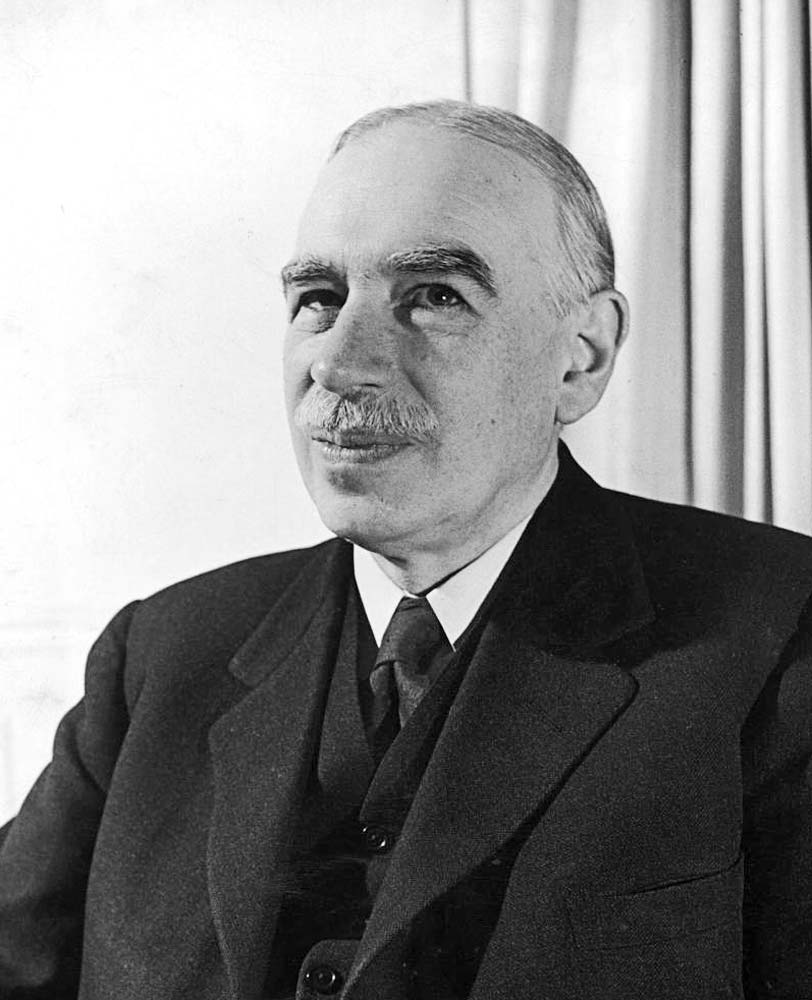
LGBT heroes - John Maynard Keynes

A hero is someone admired for their achievements and/or qualities. An LGBT hero can be:
  1. A hero who's achievements and/or qualities relate to the LGBT community
  2. A hero who is also lesbian, gay, bisexual or transgendered (LGBT)
  3. Both of the above
Most lists of LGBT heroes tend to be US-based or based on the first category. The list of UK heroes who are also LGBT normally just consists of Alan Turing. I want to expand that list as much as i can, starting with...

John Maynard Keynes (1883-1946)


John Maynard Keynes was a British economist, who's ideas shaped most of the 20th century. He developed Keynesian economics, the theory that governments should stimulate the economy during recessions by reducing interest rates and investing in infrastructure. This approach was implemented by Western governments after World War II but went out of favour in the late 1970s. However the financial crisis of 2007/8 led to resurgence of interest in his thinking. He was also part of the Bloomsbury Group (of writers, philosophers and artists).

He has been called a hero by many people (including Joan Bakewell).

However, he is rarely thought of as an LGBT hero. It is always hard to apply modern labels to people in the past, however Keynes was known to have kept a diary of his same-sex encounters and had relationships with Dilly Knox (a Bletchley Park codebreaker) and Duncan Grant (an artist). However in 1921 he met and then married Lydia Lopokova (a Russian ballerina).

Some of his famous quotes include:
  • "When my information changes, I alter my conclusions. What do you do, sir?"
  • "The long run is a misleading guide to current affairs. In the long run we are all dead."
  • "The difficulty lies not so much in developing new ideas as in escaping from old ones."
  • "Capitalism is the astounding belief that the most wickedest of men will do the most wickedest of things for the greatest good of everyone."

I believe that Keynes' achievements had an international impact, made the world a better place and that he wasn't straight - an LGBT hero.


Tuesday, 10 January 2017

News you might have missed: December 2016


From a shock by-election result to a dodgy loan, and from student visas to a graduate suing for bad teaching...

Here's the news you might have missed in December...

Saturday, 3 December 2016

News you might have missed: November 2016


Apart from the US election and it's ongoing fallout, there has been some other news...

Here's the news you might have missed in November...


Monday, 14 November 2016

News you might have missed: October 2016


From Tory conference speeches to by-election results, and from Lindsey Lohan to Tim Horton...

Here's the news you might have missed in October...

Tuesday, 4 October 2016

News you might have missed: September 2016


From Brexit plans (or lack thereof) to Justin Trudeau, and from Freshers to algorithms...

Here's the news you might have missed in September...

Tuesday, 13 September 2016

News you might have missed: August 2016


From Brexit "myths" to Open Britain, and from student grants to Strictly Comes Dancing...

Here's the news you might have missed in August...

Wednesday, 3 August 2016

News you might have missed: July 2016


From Justin Trudeau to Owen Smith, and from FOSIS to Pokemon...

Here's the news you might have missed in July...

Sunday, 10 July 2016

News you might have missed: June 2016


Ignoring the Brexit referendum and its fallout, there was a tiny bit of other news...

Here's the news you might have missed in June...


Saturday, 11 June 2016

News you might have missed: May 2016


From psychoactive substances to the EU referendum, and from PrEP to Magic Mike live...

Here's the news you might have missed in May...

Tuesday, 3 May 2016

News you might have missed: April 2016


From human rights to the EU referendum, and from Star Wars to Ab Fab...

Here's the news you might have missed in April...

Wednesday, 13 April 2016

News you might have missed: March 2016


From poppers being unbanned to the EU referendum, and from u-turns on PreP to Xena: The Warrior Princess...

Here's the news you might have missed in March...


Sunday, 6 March 2016

News you might have missed: February 2016


From Boris Johnson to satanic prayers, and from space lasers to Top Gear...

Here's the news you might have missed in February...

Tuesday, 9 February 2016

News you might have missed: January 2016


From MPs debating banning Donald Trump to actually banning poppers, and from the Trans Inquiry to LEGO disabled minifigures...

Here's the news you might have missed in January...


Monday, 4 January 2016

News you might have missed: December 2015


From election losers to LGBT power, and from River Song to a drag queen's Christmas message...

Here's the news you might have missed in December...

Sunday, 3 January 2016

News you might have missed: November 2015


From the Tory cuts to banning poppers, and from the Rainbow List to Keeping Up Appearances...

Here's the news you might have missed in November...


Wednesday, 11 November 2015

News you might have missed: October 2015


From the EU referendum to Uber, and from women entrepreneurs to Adele...

Here's the news you might have missed in October...