Showing posts with label UK. Show all posts

Monday, 27 February 2017

LGBT heroes - Marguerite Radclyffe Hall

A hero is someone admired for their achievements and/or qualities. An LGBT hero can be:
  1. A hero who's achievements and/or qualities relate to the LGBT community
  2. A hero who is also lesbian, gay, bisexual or transgendered (LGBT)
  3. Both of the above
Most lists of LGBT heroes tend to be US-based or based on the first category. The list of UK heroes who are also LGBT normally just consists of Alan Turing. I want to expand that list as much as i can, continuing with...

Marguerite Radclyffe Hall (1880 - 1943)


Marguerite Radclyffe Hall was an English poet and author, best known for the novel The Well of Loneliness (a groundbreaking work in lesbian literature).

She was born in Bournemouth, Dorset, the daughter of wealthy parents. In 1907 she met Mabel Batten. They fell in love (despite the 24 year age difference) and moved in together. Batten died in 1916. Hall then fell in love with Batten's cousin Una Troubridge and they stayed together until Hall's death in 1943.

She had her first poetry published in 1894 (at the age of 14) and her first novel in 1924. The Well of Loneliness was her fifth novel, published in 1928.  It follows the life of Stephen Gordon, an Englishwoman from an upper-class family whose "sexual inversion" (homosexuality) is apparent from an early age. She finds love with Mary Llewellyn, whom she meets while serving as an ambulance driver in World War I, but their happiness together is marred by social isolation and rejection, which Hall depicts as typically suffered by "inverts," with predictably debilitating effects. The novel portrays inversion as a natural, God-given state and makes an explicit plea: "Give us also the right to our existence".

At Bow Street in London on 16 November 1928, the novel found itself in the dock on a charge of obscenity, following a campaign by the Sunday Express. The most explicit phrase in the book was "and that night, they were not divided". The magistrate declared the book obscene and ordered the all copies be destroyed. More information about the trial can be found hereHall appealed but lost (after only five minutes of deliberation!).

The book was finally printed in the UK in 1949 and has been printed continuously ever since then. In 1974, it was a Radio 4 Book at Bedtime (!), showing how times have changed!

Radliffe Hall was clearly an out and proud lesbian, living in a time when that was not an easy thing to do. She wrote The Well of Loneliness, a groundbreaking call for acceptance for lesbians and argued that it was not an obscene publication. She was clearly an LGBT hero.


Previous LGBT heroes


Tuesday, 21 February 2017

LGBT heroes - Patrick Trevor-Roper

A hero is someone admired for their achievements and/or qualities. An LGBT hero can be:
  1. A hero who's achievements and/or qualities relate to the LGBT community
  2. A hero who is also lesbian, gay, bisexual or transgendered (LGBT)
  3. Both of the above
Most lists of LGBT heroes tend to be US-based or based on the first category. The list of UK heroes who are also LGBT normally just consists of Alan Turing. I want to expand that list as much as i can, continuing with...

Patrick Trevor-Roper (1916-2004)


Patrick Trevor-Roper was a British eye-surgeon and gay rights activist. He was born in Northumberland and was educated at Charterhouse and the University of Cambridge. During World War II he served in the Royal New Zealand Army Medical Corps in the Mediterranean. After the war he became a specialist in ophthalmic surgery.

In 1954 the then Conservative Government set up the Wolfenden Committee to review both homosexual offences and prostitution. The committee could only find three gay men willing to testify as witnesses to the committee, including Patrick Trevor-Roper. The others were the journalist Peter Wildeblood (who had been convicted of a homosexual offence) and Carl Winter (director of the Fitzwilliam Museum). 

All three should be much more famous for their bravery in testifying for gay rights in the 1950s!

The committee reported in 1957 and recommended that "homosexual behaviour between consenting adults in private should no longer be a criminal offence". This eventually led to the Sexual Offences Act 1967 which decriminalised homosexual acts in private between two men  in England and Wales, both of whom had to have attained the age of 21.

In his self-written obituary(!), Trevor-Roper wrote:
"He led a mildly unconventional life, continuing to practise until well into his 80s from his house in Regent’s Park, and retiring at weekends to a writers’ sanctuary in a Dorset rectory. There he produced several ophthalmic textbooks, of which his Lecture Notes survived seven editions (and six translations), and four editions of The World Through Blunted Sight, relating eye defects to patterns of artistry; he also edited a book of essays on 18th century opera. For 38 years he was editor of the Transactions of the Ophthalmological Society, UK (later entitled Eye)."

He also founded an eye hospital in Addis Ababa, a mobile eye unit in Sierra Leone, and organised an oculoplastic unit in Lagos during their civil war. 

In the 1980's as the AIDS epidemic started, Trevor-Roper was one of the founders of the Terrence Higgins Trust, the United Kingdom's leading AIDS service organisation, which held its first meeting at his home.

Trevor-Roper was diagnosed as having Alzheimer’s disease in 2003. In 2004 he developed a cancer in his neck, of unknown primary site. He was survived by Herman Chan, his partner of many years.

I believe that Trevor-Roper's achievements made the world a better place generally and specifically the UK a better place for gay and bisexual men, and that he wasn't straight - an LGBT hero.


Previous LGBT heroes


Monday, 13 February 2017

LGBT heroes - Arthur C Clarke

A hero is someone admired for their achievements and/or qualities. An LGBT hero can be:
  1. A hero who's achievements and/or qualities relate to the LGBT community
  2. A hero who is also lesbian, gay, bisexual or transgendered (LGBT)
  3. Both of the above
Most lists of LGBT heroes tend to be US-based or based on the first category. The list of UK heroes who are also LGBT normally just consists of Alan Turing. I want to expand that list as much as i can, continuing with...

Arthur C Clarke (1917-2008)


Sir Arthur Charles Clarke was  a British science fiction writer, science writer and futurist (producing 70 fiction and non-fiction books), inventor, undersea explorer, and television series host. 

He was born in Minehead (in Somerset) and then moved to London in 1936. During World War II, he joined the Royal Air Force as a radar instructor and technician. After the war he gained a first class honours degree in Physics and Maths from Kings College, London. He moved to Ceylon (now Sri Lanka) in 1956 for the diving opportunities and more tolerant laws relating to homosexuality.

As a science fiction writer, he is famous for writing numerous books including 2001: A Space Oddity (based on some of his short stories). As a science writer, Clarke contributed to the popularity of the idea that geostationary satellites would be ideal telecommunications relays and that space elevators would reduce the cost of getting into orbit.

The Arthur C. Clarke Foundation regards Sir Arthur’s work as an unparalleled synthesis of science, literature, and social concern. History will list him among the few whose insights ranged most broadly in our comprehension of the universe we live in, the way we live in it, and the responsibility we have to improve our world.The Foundation exists to advance these insights.

Clarke married in 1953 but the couple separated after 6 months. Clarke never remarried, but was close to a Sri Lankan man, Leslie Ekanayake, whom Clarke called his "only perfect friend of a lifetime", in the dedication to his novel The Fountains of Paradise.

"Everyone knew he was gay. In the 1950s I'd go out drinking with his boyfriend. We met his protégés, western and eastern, and their families, people who had only the most generous praise for his kindness. Self-absorbed he might be and a teetotaller, but an impeccable gent through and through."

Some of his famous quotes include:
  • "Any sufficiently advanced technology is indistinguishable from magic." 
  • "Two possibilities exist: either we are alone in the Universe or we are not. Both are equally terrifying." 
  • "In the struggle for freedom of information, technology, not politics, will be the ultimate decider."
  • "It is not easy to see how the more extreme forms of nationalism can long survive when men have seen the Earth in its true perspective as a single small globe against the stars."
  • "I don’t believe in astrology; I’m a Sagittarius and we’re skeptical."
  • "Any teacher that can be replaced by a machine should be!"

I believe that Clarke's achievements had an international impact, made the world a better place and that he wasn't straight - an LGBT hero.


Previous LGBT heroes


Sunday, 5 February 2017

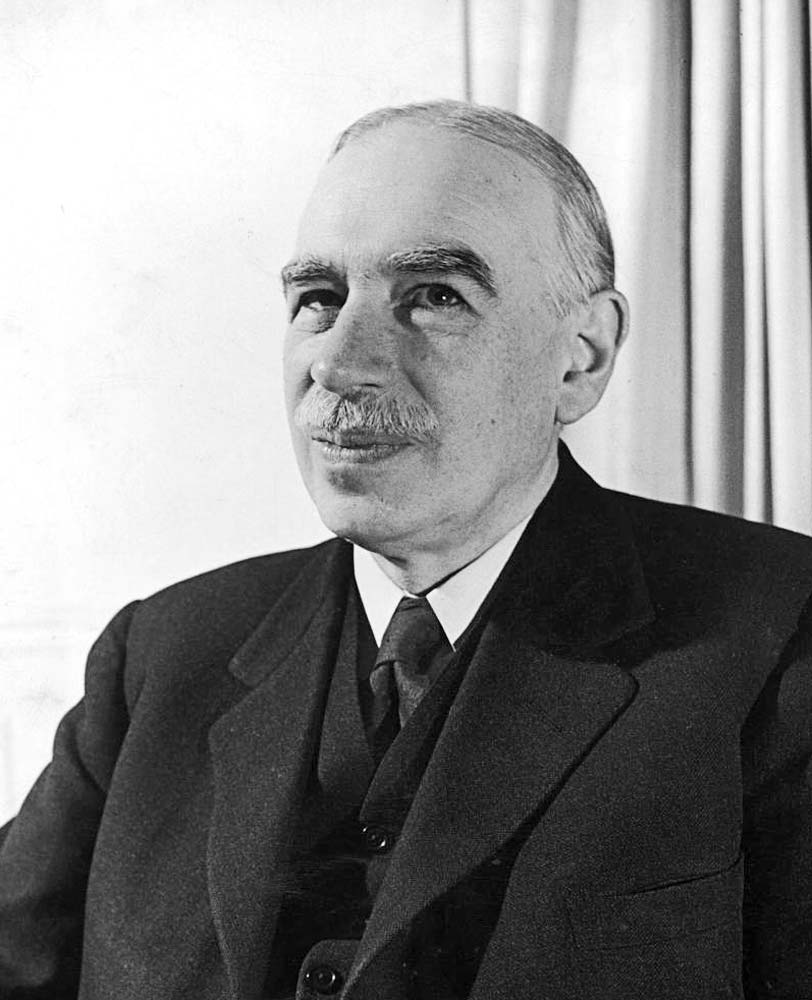
LGBT heroes - John Maynard Keynes

A hero is someone admired for their achievements and/or qualities. An LGBT hero can be:
  1. A hero who's achievements and/or qualities relate to the LGBT community
  2. A hero who is also lesbian, gay, bisexual or transgendered (LGBT)
  3. Both of the above
Most lists of LGBT heroes tend to be US-based or based on the first category. The list of UK heroes who are also LGBT normally just consists of Alan Turing. I want to expand that list as much as i can, starting with...

John Maynard Keynes (1883-1946)


John Maynard Keynes was a British economist, who's ideas shaped most of the 20th century. He developed Keynesian economics, the theory that governments should stimulate the economy during recessions by reducing interest rates and investing in infrastructure. This approach was implemented by Western governments after World War II but went out of favour in the late 1970s. However the financial crisis of 2007/8 led to resurgence of interest in his thinking. He was also part of the Bloomsbury Group (of writers, philosophers and artists).

He has been called a hero by many people (including Joan Bakewell).

However, he is rarely thought of as an LGBT hero. It is always hard to apply modern labels to people in the past, however Keynes was known to have kept a diary of his same-sex encounters and had relationships with Dilly Knox (a Bletchley Park codebreaker) and Duncan Grant (an artist). However in 1921 he met and then married Lydia Lopokova (a Russian ballerina).

Some of his famous quotes include:
  • "When my information changes, I alter my conclusions. What do you do, sir?"
  • "The long run is a misleading guide to current affairs. In the long run we are all dead."
  • "The difficulty lies not so much in developing new ideas as in escaping from old ones."
  • "Capitalism is the astounding belief that the most wickedest of men will do the most wickedest of things for the greatest good of everyone."

I believe that Keynes' achievements had an international impact, made the world a better place and that he wasn't straight - an LGBT hero.


Tuesday, 10 January 2017

News you might have missed: December 2016


From a shock by-election result to a dodgy loan, and from student visas to a graduate suing for bad teaching...

Here's the news you might have missed in December...

Monday, 7 September 2015

Tuesday, 16 June 2015

News you might have missed: May 2015


From shocking election results to a fake barrister, and marriage equality across Europe to a non-scientist Science minister...

Here's the news you might have missed in May... 

Friday, 8 May 2015

My post election thoughts

I had two new year resolutions this year: 

1) Get fit
2) Get more politically active. 

I have thrown myself into getting fit. I joined a gym, hired a personal trainer and can definitely see the benefits. 

However I have done very little towards being more politically active this year. I did nothing locally for the election but did some delivering for a friend standing locally in a different county. I was on annual leave on Thursday but just went to the gym. When people asked what I thought of the election I described myself as apathetic. I knew I would be interested in the results but not enough to be more active.

But then I saw the exit poll and realised that I cared way more than I thought I did. 

My last 24 hours match the five stages of grief:
  • Denial - The exit poll can't be right
  • Anger - How dare people punish good Lib Dem (former) MPs
  • Bargaining - I'll be happy to keep Ed Balls and even get Nigel Farage in return for Vince Cable
  • Depression - The end of the world is nigh. The Tories will run riot without the Lib Dems to moderate them. What can we do with only 8 MPs?
  • Acceptance - People didn't believe that the Lib Dems were a force for good. That can change. I believe in democracy and the people have spoken. Seats will never match votes but this is ridiculous! 
Now is the time to rebound...

What next personally?I will get involved locally. I will campaign for PR for local elections, an English parliament, a proper federal UK, and to stay in EU.

What next for the Lib Dems?There clearly will be new leadership but I hope there is not just a coronation for Tim Farron. We need to spend the next five years rebuilding support at all levels.

Tuesday, 21 April 2015

Engaging Citizens - Week 4 - Innovations in Citizen Engagement

I am studying an online course called Engaging Citizens: A Game Changer for Development? and trying to blog as I go. Although the course is focussed on international development, I want to try to apply the ideas to UK politics (both national and local) and also to student engagement in higher education.


Here are my thoughts on week 4:
What is meant by ICT? Community radio, internet, mobile phones, social media, SMS, mobile apps, crowdsourcing technology, community mapping, and social computing. 
1) How can the potential of ICTs be translated into real enhancements? Programs must go beyond access to technology and instead strengthen the capabilities of people to use ICTs in a meaningful way.How can we develop an impact chain on the link between ICTs and peoples' human development? a) Information needs assessment and existing communication ecologies. b) Who has access? c) Does this now translate into enhancements in political, economic and social rights?
2) Can ICT enhance accountability and close the feedback loop? ICT can build accountability by: Supporting the two-way flow of information, Reducing information asymmetries, Facilitating recurring interaction.
3) What is the specific value that ICT brings to citizen engagement? Radical openness, Effectiveness, Timeliness, Directness, Inclusiveness, Collaboration. 
4) What are the early lessons on how to implement ICT-enabled citizen engagement? Technology is not a panacea for development. ICT-mediated mechanisms should be designed in response to a clearly defined goal. The selection of appropriate technological solutions is critical and has to be context specific. To ensure the scalability and sustainability of ICT-enabled initiatives, the deployment of ICT tools should follow and iterative and incremental approach. 

Reflection:
In the UK there is access to ICT (internet and mobile phones) therefore ICT initiatives will be software-based e.g. Lobby a Lord (re: same-sex marriage) at UK level and Contact your Northampton Borough Councillors at a local level. These certainly show directness and timeliness.


Are central governments or local governments more responsive to citizen needs? Optimists claim that decentralisation increases citizen participation & governmental accountability, and improves allocative efficiency & generates greater equity in service distribution. Pessimists claim that decentralisation is too susceptible to elite capture (powerful individuals diverting state resources to their own ends), and lacks the resources needed to provide efficient and responsive public services. How can governments overcome the challenges of elite capture and limited capacity to create more inclusive (rather than extractive) institutions? How can the mismatch between government spending and citizens' needs be resolved? The simple adoption of participatory budgeting does not translate into automatic welfare improvements.

Reflection:
The UK is very centralised, with limited autonomy in local government (to avoid a "postcode lottery"). The voting system of First Past the Post has resulted in virtual one-party states in local government - elite capture in a sense. There is a definite distance between citizens and government, only slightly breached at election time.
E-Governance refers to the usage of ICT to:
1) Increase administrative efficiency, and
2) Improve the interface between government and citizens by increasing the transparency and accountability of government processes.
By losing sight of the human development approach, many ICT-heavy citizen engagement initiatives have fallen short.
Case study 1: Karnataka - National Rural Health Mission - combination of ICT-heavy and ICT-light approaches. Although technological capabilities made data more transparent, in this case it did not lead to improvements in data quality and, importantly, timeliness. Resulted in reinforcement of hierarchical decision making structures. In contrast, the (non-ICT) Village Health and Sanitation Committees have become a key forum to mediate between primary health centres and the communities they serve.
Case study 2: Tanzania - Giving smart phones to health workers in villages to gather data. Despite poor ICT infrastructure (low upload/download speeds), data collected was useful for planning and decision making. Two-way information flows, as well as integrating new information and data into existing bureaucratic systems, tailored to the specific context, are both critical in bridging the relationship between citizens and governments. 

Reflection:
More computers/software is not the answer to every problem. In the UK, large ICT-initiatives tend to fail or go way over budget (e.g. Universal credit). We should aim for evolution, not revolution.
Technology is the medium, it's not the end in itself. It's just a way to coordinate efforts. Map your own community and pick the right tools for you. Liking on Facebook does not equal social change. Don't force technology on your community. There is a divide between "digital natives" and "digital immigrants" when approaching new technology/ICT. Digital immigrants' tend to show a lot of resistance to technology. Just make it simple. Need to be inclusive. Community of geeks and community of social activists - need people who are members of both communities. If you have financial problems, technology is key. Technology allows no room for improvisation (e.g. elections). Failure happens when you are not ready - test, improve, test again!

Reflection:
There are lots of ICT initiatives in the UK at the moment, linked to the general election (e.g. vote match). These tend to be simple and clear. I know some geeks and I know some social activists and they are definitely two different populations but there are some great people who are both.


Video 5: Course Summary
A good summary of all the previous talks.


Video 6: Course Takeaways
1. Citizen engagement, when done well, is a very powerful vehicle to create meaningful change and improve development outcomes.
2. Beyond its instrumental value, citizen engagement also holds intrinsic value and is a cornerstone of political rights and human dignity.
3. Despite the benefits that citizen engagement programs can bring, there is no template or one-size-fits-all approach that can be applied everywhere.
4. Strategic citizen engagement programs, which are long-term and multifaceted, tend to work better than tactical and short-term programs.
5. It is important not to do things just for the sake of doing them. Instead, we must start with a clear objective.
6. Technology can greatly increase the scalability and reach of citizen engagement programs, as well as increase efficiency and reduce participation costs. However, it cannot fundamentally alter the relationship between governments and citizens on its own.
7. We should not expect overnight solutions or silver bullets. Nevertheless, we should continue to experiment, share, and learn, and strive to build a more open, citizen-centric approach to government.

Reflection:
Lots for me to think about!


Quiz
1st attempt 8/10
2nd attempt 10/10 :-) 


Previous MOOC blog posts:

Wednesday, 8 April 2015

How effective are public consultations? Questions for elected representatives to consider (Engaging Citizens - Final Project)


I am studying an online course called Engaging Citizens: A Game Changer for Development? and trying to blog as I go. Although the course is focussed on international development, I want to try to apply the ideas to UK politics (both national and local) and also to student engagement in higher education.


The overall objective of the final assignment is:
To design a theoretical citizen engagement initiative to improve policymaking and/or public service delivery in your local community, city or country, and then to creatively express how this might look in the real world through the creation of a digital artefact.

Here are my answers to the five questions about the proposed initiative:

1. What are you trying to achieve?
In UK local politics, elected representatives regularly make decisions on a range of issues. Some decisions are made following public consultations (normally organised by the local council). Elected representatives are presented with the outcome of the consultation and are then expected to vote on the decision. My initiative is to produce a set of questions that elected representatives could use when considering public consultations. The aim would be to improve policymaking by empowering elected representatives to demand better public consultations to inform their decisions. I have adapted the participatory design elements and propositions identified in the paper “Putting the “Public” Back in Public Values Research: Designing Participation to Identify and Respond to Values” (Nabatchi 2012) into seven questions. The questions could be promoted online to raise awareness, with the ability for interested people to download their own version. The questions could also be used by civil society groups to give positive feedback to those bodies organising public consultations, to improve the quality of future consultations.


2. Who are the key players?
The promoter of the initiative would be one of the various local government think tanks in the UK. The questions could be used as part of a larger campaign for improving local government generally, improving the planning process, or improving the effectiveness of local councillors. The initial target audience would be elected representatives on the Planning Committee of each local authority. They could be recruited through the Local Government Association (http://www.local.gov.uk/), a politically-led, cross-party organisation that works on behalf of local councils. An alternative route would be through the political parties that they belong to (e.g. Association of Labour Councillors http://lgalabour.local.gov.uk/alc).


3. How does it work?
The initiative is simply to provide a set of questions for elected representatives to use when discussing public consultations. It is then up to the representatives to decide the appropriate time to ask the questions and how to respond to the answers. The questions would be hosted online, ideally on websites belonging to a range of organisations (both political organisations and civil society organisations). The questions could also be included in newsletters, magazines or other documents that are sent to elected representatives. Wherever the questions are available, there should also be an opportunity for the elected representative to give some feedback.


4. What are the risks and opportunities?
The main risk is that the initiative is ignored by the elected representatives, either by not being aware of its existence or not thinking that the questions are useful. A communication strategy would minimise the risk of lack of awareness. The usefulness of the questions should be tested in advance in a pilot study. The questions should be presented to a small group of elected representatives from a range of councils and of different political parties, and asking for feedback. This could be either a virtual or face-to-face event. The opportunities that could be leveraged to maximise the potential of the initiative include it being included as part of a national campaign by a civil society group with an interest in planning (e.g. the Campaign to Protect Rural England http://www.cpre.org.uk/) or organisations for elected representatives (e.g. the Local Government Association (http://www.local.gov.uk/).


5. How will you know if it is successful?

The success of the initiative could be measured in two dimensions: awareness and usefulness. The first dimension would be the awareness of the questions by the elected representatives. This could be measured directly (by surveying the elected representatives) or indirectly (e.g. measuring the number of downloads). The usefulness of the questions could be measured in the short term (did they help the representative when they were discussing the consultation?) and in the medium term (did using the questions improve subsequent consultations?). After the short term feedback, the questions could be revised to improve their usefulness. 


Previous MOOC blog posts: